Towing vehicles on narrow roads presents unique challenges that require skill, precision, and strategic planning. Unlike wide highways or city streets, narrow roads offer limited maneuvering space, making standard towing procedures more complicated. Operators must be mindful of road width, obstacles, and the safety of other road users while ensuring that the vehicle is transported without damage. Successfully navigating these situations relies on preparation, specialized equipment, and experience.
Assessing the Situation Before the Tow
Before attempting to tow a vehicle on a narrow road, operators should conduct a careful assessment. Evaluating the road width, surrounding environment, and potential obstacles helps in planning the safest route. Factors such as parked vehicles, curbs, ditches, and low-hanging branches must be taken into account. Understanding the vehicle’s size, weight, and turning radius also plays a critical role. In some cases, operators may need to request temporary traffic control assistance or coordinate with authorities to ensure other vehicles can pass safely. A thorough assessment minimizes the risk of accidents and ensures a smoother towing process.
Choosing the Right Equipment for Narrow Road Towing
Towing on narrow roads often requires specialized equipment. Smaller tow trucks, wheel-lift systems, or low-profile flatbeds can navigate tighter spaces more effectively than standard trucks. Adjustable or extendable tow beds provide additional flexibility, allowing vehicles to be positioned precisely. Tow operators may also use portable ramps or winches to load vehicles in tight spaces without causing damage. Proper equipment selection is crucial to prevent scraping, collisions, or other damage during transport. Maintaining this equipment in optimal condition ensures reliability and safety on challenging routes.
Techniques for Safe Vehicle Loading and Transport
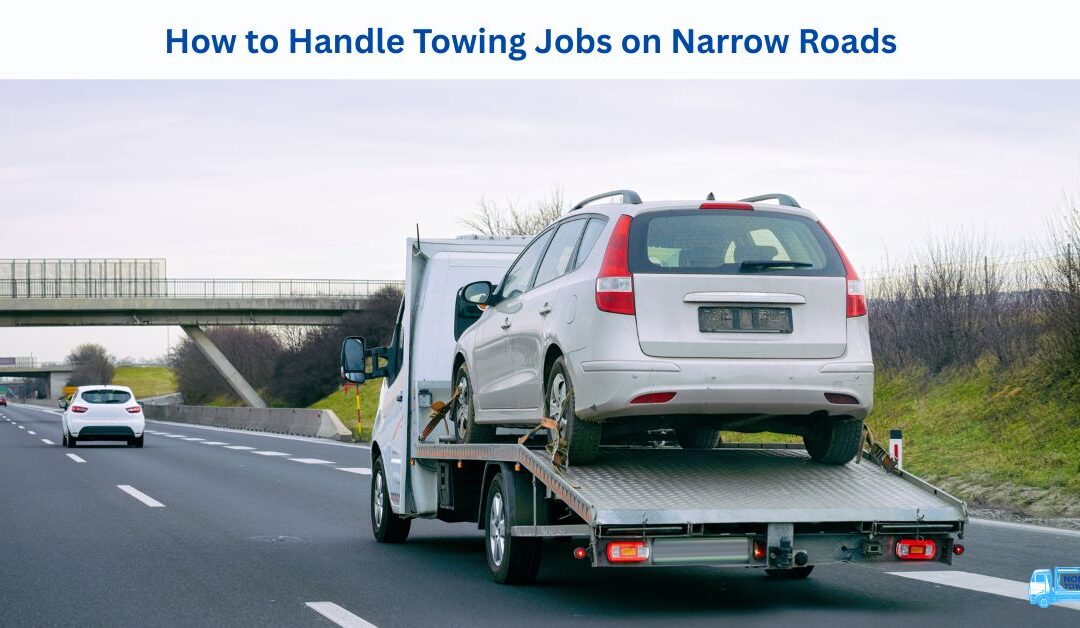
Precision is key when loading and transporting vehicles on narrow roads. Operators should approach slowly, maintaining full control of the tow truck and the vehicle being moved. Communication with assistants or spotters may be necessary to guide the vehicle and prevent contact with obstacles. Vehicles should be centered on the tow platform and secured with high-quality straps or tie-downs to prevent movement during transport. Smooth, controlled driving, including gentle acceleration, braking, and turning, reduces stress on both the towed vehicle and the tow truck. This careful approach is essential for preserving vehicle condition and ensuring road safety.
Coordinating with Traffic and Pedestrians
Narrow roads often pose challenges beyond space constraints, including oncoming traffic, cyclists, and pedestrians. Tow operators must remain vigilant and communicate effectively with anyone nearby. In certain situations, temporary roadblocks, cones, or safety personnel may be necessary to manage traffic. Operators should also notify relevant authorities if road closures or detours are required. Effective coordination helps minimize congestion, reduce risks, and ensure a safe environment for both the tow crew and the public. Keeping communication clear and professional demonstrates responsibility and reliability.
Preparing for Unexpected Obstacles
Even with careful planning, towing on narrow roads can present unexpected challenges. Vehicles may be stuck in tight spots, road surfaces may be uneven, or weather conditions can complicate operations. Experienced tow operators anticipate these situations and carry contingency plans, such as winches, portable jacks, or additional personnel. Remaining calm and adaptable allows operators to overcome obstacles without compromising safety. Proper training, situational awareness, and problem-solving skills are essential to managing the unpredictability of narrow-road towing efficiently and effectively.
Conclusion
Towing on narrow roads requires more than just technical skill—it demands careful planning, specialized equipment, and a strategic approach to ensure safety for both the vehicle and the public. Operators who assess the situation thoroughly, select the right equipment, and execute precise loading and transport procedures can successfully navigate tight spaces. Coordinating with traffic, anticipating obstacles, and maintaining professionalism throughout the process further ensure a smooth operation. By mastering the complexities of narrow-road towing, tow truck operators provide reliable, safe, and efficient service, even in the most challenging environments.
Northern Tow Trucks
620 Canning St
Carlton North VIC 3054
(03) 7064 2500