Vehicle recovery operations are a vital part of road safety and traffic management. When vehicles become immobilized due to accidents, mechanical failures, or environmental conditions, tow trucks play a crucial role in restoring order and preventing further hazards. Beyond simply moving disabled vehicles, modern recovery operations involve specialized equipment, trained operators, and coordinated efforts with emergency services. Tow trucks are the backbone of these operations, ensuring that vehicles are recovered efficiently, safely, and with minimal disruption to traffic flow.
Understanding Vehicle Recovery Operations
Vehicle recovery operations go beyond standard towing services. Recovery typically involves vehicles that are stuck, overturned, severely damaged, or positioned in dangerous or inaccessible locations. These situations require careful planning and execution to avoid further damage or injury. Tow truck operators must assess the scene, identify potential risks, and determine the safest recovery approach.
Recovery operations often take place in challenging environments such as highways, construction zones, rural areas, or accident scenes. Vehicles may be wedged against barriers, trapped in ditches, or piled up in multi-vehicle collisions. Tow trucks equipped with winches, booms, and stabilization tools are essential for handling these complex scenarios. Without professional recovery services, disabled vehicles would pose ongoing dangers to motorists and emergency responders.
Types of Tow Trucks Used in Recovery Operations
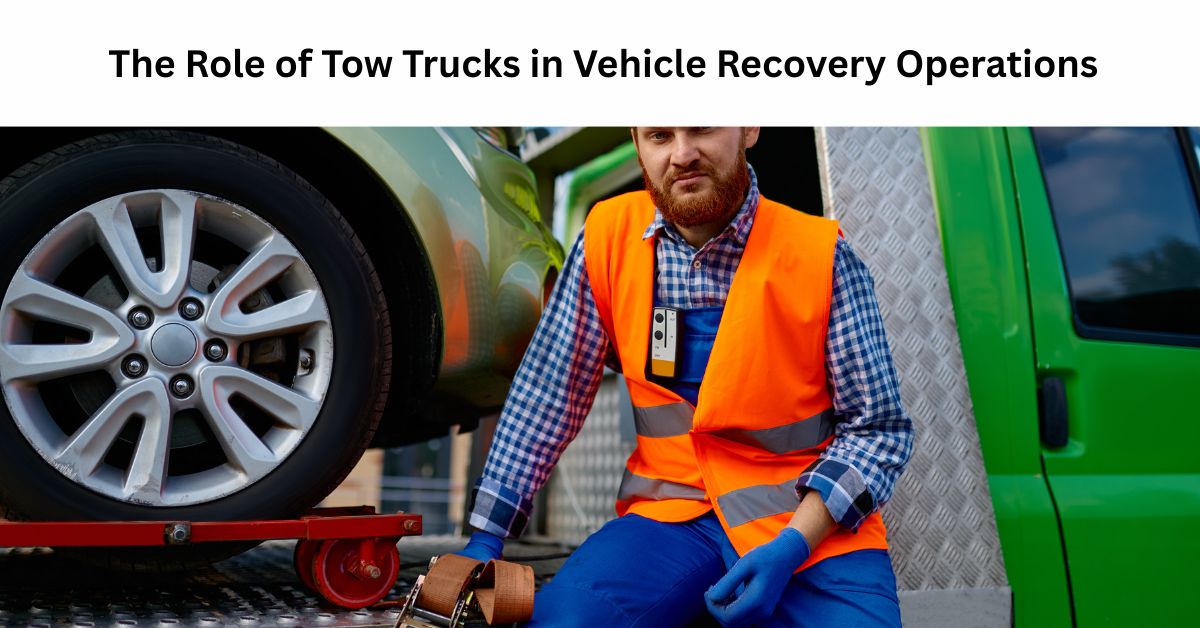
Different recovery situations require different types of tow trucks. Flatbed tow trucks are commonly used for standard recoveries where vehicles can be loaded safely onto a platform. However, for more complex recoveries, wheel-lift trucks, integrated tow trucks, and heavy-duty wreckers are often necessary.
Heavy-duty tow trucks are especially important for recovering large vehicles such as buses, trucks, and construction equipment. These trucks are designed with powerful winches, reinforced frames, and advanced hydraulic systems capable of lifting and stabilizing heavy loads. Rotator tow trucks provide exceptional versatility, allowing operators to lift vehicles from difficult angles and confined spaces. The availability of specialized tow trucks ensures that recovery operations can be performed efficiently regardless of the situation.
Safety and Precision During Recovery Processes
Safety is the top priority in vehicle recovery operations. Tow truck operators must manage multiple risks, including traffic hazards, unstable vehicles, and environmental conditions. Proper positioning of the tow truck is essential to maintain stability and prevent rollovers during recovery. Operators also use stabilizing outriggers and controlled winching techniques to ensure precision.
Communication is another critical element of safe recovery. Operators often coordinate with law enforcement, firefighters, and medical personnel to secure the scene before beginning recovery efforts. Clear communication helps prevent accidents and ensures that recovery operations proceed smoothly. Precision handling reduces the risk of secondary damage to the vehicle and surrounding property, reinforcing the importance of professional training and experience.
The Impact of Tow Trucks on Traffic Flow and Public Safety
Tow trucks play a significant role in restoring normal traffic flow after incidents. Disabled vehicles left on roadways can cause congestion, secondary accidents, and delays for emergency services. Prompt recovery minimizes these risks and helps keep roads clear and safe for all users.
In accident scenarios, tow trucks assist law enforcement by removing damaged vehicles quickly, allowing investigations to proceed efficiently. During adverse weather conditions, recovery services become even more critical, as stranded vehicles can worsen road conditions and increase accident risks. Tow trucks act as first responders in many situations, providing assistance that protects both drivers and the broader community.
Advancements in Vehicle Recovery Technology
Technological advancements have significantly improved the effectiveness of vehicle recovery operations. Modern tow trucks are equipped with GPS systems, real-time communication tools, and advanced hydraulic controls that enhance precision and efficiency. These technologies allow operators to respond faster, navigate efficiently, and perform recoveries with greater accuracy.
Improved materials and engineering have also led to stronger winches, lighter yet more durable cables, and enhanced safety features. Training programs now incorporate simulation and advanced techniques, ensuring operators are prepared for complex recoveries. As vehicles continue to evolve, including electric and hybrid models, recovery equipment and methods are also adapting to meet new challenges. Tow trucks remain at the forefront of innovation, ensuring that recovery operations keep pace with modern transportation demands.