1. Understanding the Rise of Electric Vehicles
Electric vehicles, often called EVs, are becoming more common every year as more drivers choose them for their efficiency, environmental benefits, and lower fuel costs. Governments and manufacturers are investing heavily in electric technology, meaning EVs are quickly moving from a niche product to a mainstream choice. As more electric vehicles appear on roads, the towing industry must adapt to new challenges in how these cars are moved, serviced, and stored.
Electric vehicles work very differently from traditional gasoline-powered cars. Instead of a petrol engine, they use large battery packs and electric motors. These systems are sensitive and require special care when handling them. For the towing industry, this means that old towing methods designed for conventional vehicles are not always suitable. The increase in EV usage is changing standard training, equipment requirements, and towing techniques. Understanding how EVs operate is the first step in safely recovering and transporting them when they break down or are involved in accidents.
2. Special Towing Requirements for Electric Vehicles
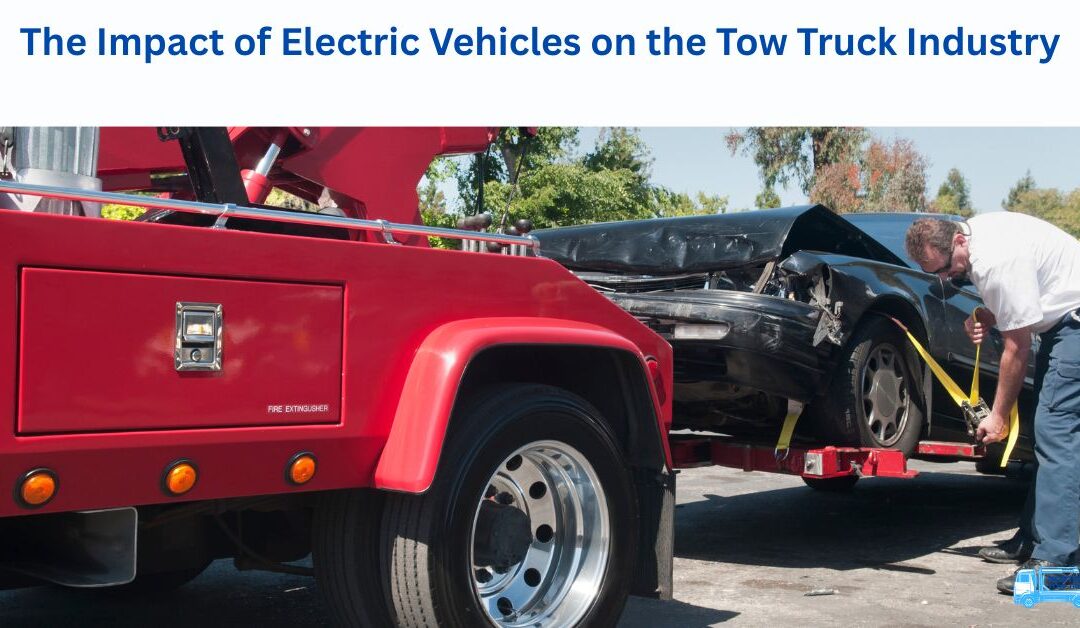
Towing an electric vehicle is not the same as towing a regular car. Most EV manufacturers recommend using a flatbed tow truck rather than wheel-lift towing. This is because many electric vehicles are equipped with regenerative braking systems that are connected to the wheels. If the wheels are allowed to rotate during towing, it can damage the electrical components or motor. Therefore, operators must use flatbed trucks to ensure all wheels are lifted off the road.
In addition, some EVs cannot be shifted into neutral the same way as traditional vehicles because they rely on electronic systems. If the vehicle’s battery is fully drained, it may not respond to normal controls. Tow truck operators must be familiar with how to secure and move EVs that have no power left. This often requires training on vehicle-specific procedures since different brands have different system designs. Safety must be the top priority, and improper towing can easily lead to very costly damage.
3. Battery Safety and Handling Considerations
The battery is the most valuable and sensitive part of an electric vehicle. Large lithium-ion batteries store energy at high voltage, which can create safety risks if damaged. In cases of accidents, EV batteries can overheat or become unstable. This is why tow truck operators need to assess the condition of the battery before towing. If the battery is leaking, smoking, or emitting heat, specialized handling and transport procedures are necessary.
Tow truck drivers working with electric vehicles must also be aware of the risk of thermal runaway, which is when a battery overheats and may catch fire. Fires involving lithium batteries are harder to extinguish than typical car fires and sometimes require isolation rather than water suppression. Operators must know when to call emergency services and how to secure the vehicle to prevent further risk. Many towing companies are now investing in fireproof containment blankets and battery monitoring tools to improve safety.
4. Training and Equipment Upgrades in the Towing Industry
The shift toward electric vehicles has created a demand for new training programs within the towing industry. Operators must learn how to identify different electric vehicle systems, interpret manufacturer towing recommendations, and use the correct equipment for each situation. Many automotive brands offer online courses, in-person training, and certification programs specifically for EV handling. Tow truck operators who earn these certifications are often seen as more professional and reliable by customers.
Equipment upgrades are also becoming necessary. Towing companies need more flatbed trucks, as wheel-lift tow trucks are often unsuitable for EVs. Additional tools, such as insulated gloves, battery safety detectors, and vehicle skates, help ensure the safe movement of electric vehicles. These upgrades require investment, but they also position towing companies for growth as electric vehicles continue to replace gas-powered cars on the road. Companies that adapt early gain an advantage in the market and become trusted specialists for EV-related service calls.
5. The Future of Towing in an Electric Vehicle World
As electric vehicles continue to become more popular, the towing industry will evolve alongside them. More roadside service calls may involve charging issues rather than mechanical breakdowns. Some towing companies are already offering mobile charging units that provide enough power to get EV drivers to the nearest charging station. This saves time and reduces the need for full tows in some situations.
Long-term, electric tow trucks themselves are beginning to enter the market. As battery technology improves, tow trucks powered by electricity could reduce fuel costs and emissions while maintaining the strength required to transport vehicles. Cities and government fleets may adopt electric tow trucks to support environmental goals. The towing industry must continue to innovate and remain flexible as vehicle technology changes. Companies that embrace training, new equipment, and service upgrades will stay ahead, while those that resist change may struggle to keep up.
Conclusion
Electric vehicles are transforming the towing industry in many ways. The differences in design, safety requirements, and handling procedures mean that traditional towing methods are not always appropriate for EVs. Tow truck operators must invest in training, develop new skills, and upgrade their equipment to ensure safe and efficient service. While these changes require time and resources, they also create opportunities for towing companies to grow and expand their capabilities. The rise of electric vehicles is not just a challenge—it is an invitation for the towing industry to modernize, improve, and prepare for the future.
Northern Tow Trucks
620 Canning St
Carlton North VIC 3054
(03) 7064 2500