Towing services may seem simple from the outside, but behind every successful tow is a well-organized process designed to ensure safety, efficiency, and professionalism. Whether you’re dealing with a breakdown, an accident, or a vehicle that needs transporting, understanding how towing services work step by step can give you peace of mind during a stressful situation.
Receiving Your Call and Gathering Information
The towing process begins the moment you contact a towing company. When you call, the operator will ask for important details about your situation. This typically includes your exact location, the type of vehicle you have, and the issue you’re experiencing.
Providing accurate information is crucial because it helps the company determine what type of tow truck and equipment are needed. For example, a small car with a flat tire may require a different approach compared to a large SUV involved in an accident.
The dispatcher also prioritizes calls based on urgency. Emergency situations, such as accidents or vehicles blocking traffic, are handled immediately, while non-emergency requests are scheduled accordingly. This step ensures that help reaches you as quickly as possible.
Dispatching the Right Tow Truck
Once your information is collected, the towing company sends the most suitable tow truck to your location. Different types of tow trucks are designed for specific tasks, such as flatbed trucks for damaged vehicles or wheel-lift trucks for short-distance towing.
The dispatcher communicates directly with the driver, providing all necessary details about your situation. This allows the tow truck operator to arrive prepared with the right tools and equipment.
Modern towing companies often use GPS tracking systems to locate the nearest available truck, reducing waiting times. This efficient dispatch system ensures that you receive assistance as quickly as possible, even during busy periods.
Arriving on Site and Assessing the Situation
When the tow truck arrives, the operator will first assess your vehicle and the surrounding environment. This step is essential for determining the safest and most effective way to handle the situation.
The driver may ask you a few additional questions to better understand the problem. They will check for visible damage, the condition of the tires, and whether the vehicle can be moved easily.
Safety is the top priority at this stage. If your car is in a dangerous location, such as a busy road, the operator will take precautions to secure the area before starting the towing process. This may include using warning lights or positioning the truck to protect you and your vehicle.
Securing and Loading the Vehicle
After the assessment, the next step is securing your vehicle for transport. The method used depends on the type of tow truck and the condition of your car.
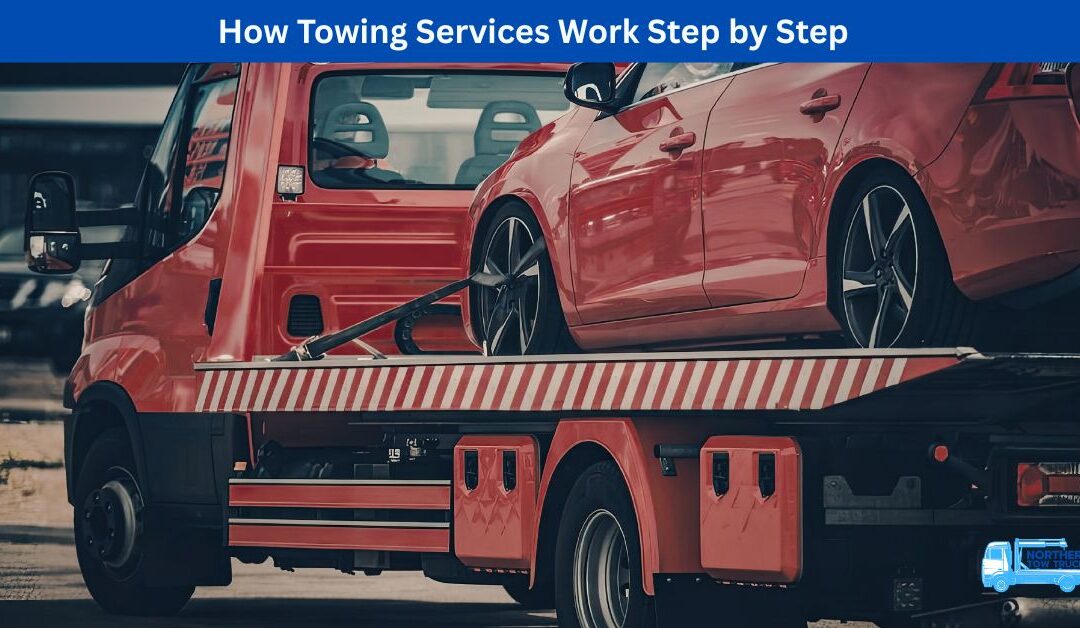
For flatbed towing, the vehicle is carefully driven or winched onto the back of the truck. Once in place, it is secured using strong straps to prevent movement during transit. This method is ideal for preventing additional wear and tear.
In wheel-lift towing, the front or rear wheels of the vehicle are lifted off the ground while the other wheels remain on the road. This method is quicker and often used for shorter distances.
The operator ensures that your vehicle is properly balanced and secured before moving. This step is critical to avoid damage and ensure a smooth transport.
Transporting and Delivering the Vehicle
The final step in the towing process is transporting your vehicle to the desired location. This could be a repair shop, your home, or a storage facility. During transit, the driver follows safe driving practices to ensure your vehicle arrives without any issues.
Upon arrival, the operator carefully unloads your vehicle and places it in the designated spot. If you’re at a repair shop, they may coordinate with the staff to ensure a smooth handover.
Before leaving, the driver may provide you with any necessary paperwork or confirm that the job has been completed to your satisfaction. This marks the end of the towing process.
Conclusion
Towing services follow a structured step-by-step process to ensure every job is handled safely and efficiently. From receiving your call to delivering your vehicle, each stage is carefully managed by trained professionals.
Understanding how towing services work can help you feel more confident and prepared if you ever need assistance. Whether it’s a simple breakdown or a more complex situation, knowing what to expect makes the experience much less stressful.
Northern Tow Trucks
620 Canning St
Carlton North VIC 3054
(03) 7064 2500